

One of the biggest concerns for new pool owners is maintenance.
“How much work is it really?”
The good news is that if you own a Compass Pools self-cleaning pool, the answer is: not much.
Our Vantage Self-Cleaning & Circulation System takes care of the majority of your pool cleaning automatically, reducing the time you spend vacuuming, brushing and manually cleaning. Like any investment, however, your pool still benefits from a simple maintenance routine to keep the water crystal clear and your equipment operating at its best.
Here’s what you need to know.
Weekly pool maintenance
A self-cleaning pool still requires a few quick weekly checks, but most homeowners find they only take a matter of minutes.
Empty the skimmer basket
Your skimmer basket collects leaves and larger debris before they reach your filtration system. Check it weekly — or more often during windy weather or autumn — and empty it as required.
Empty the debris canister
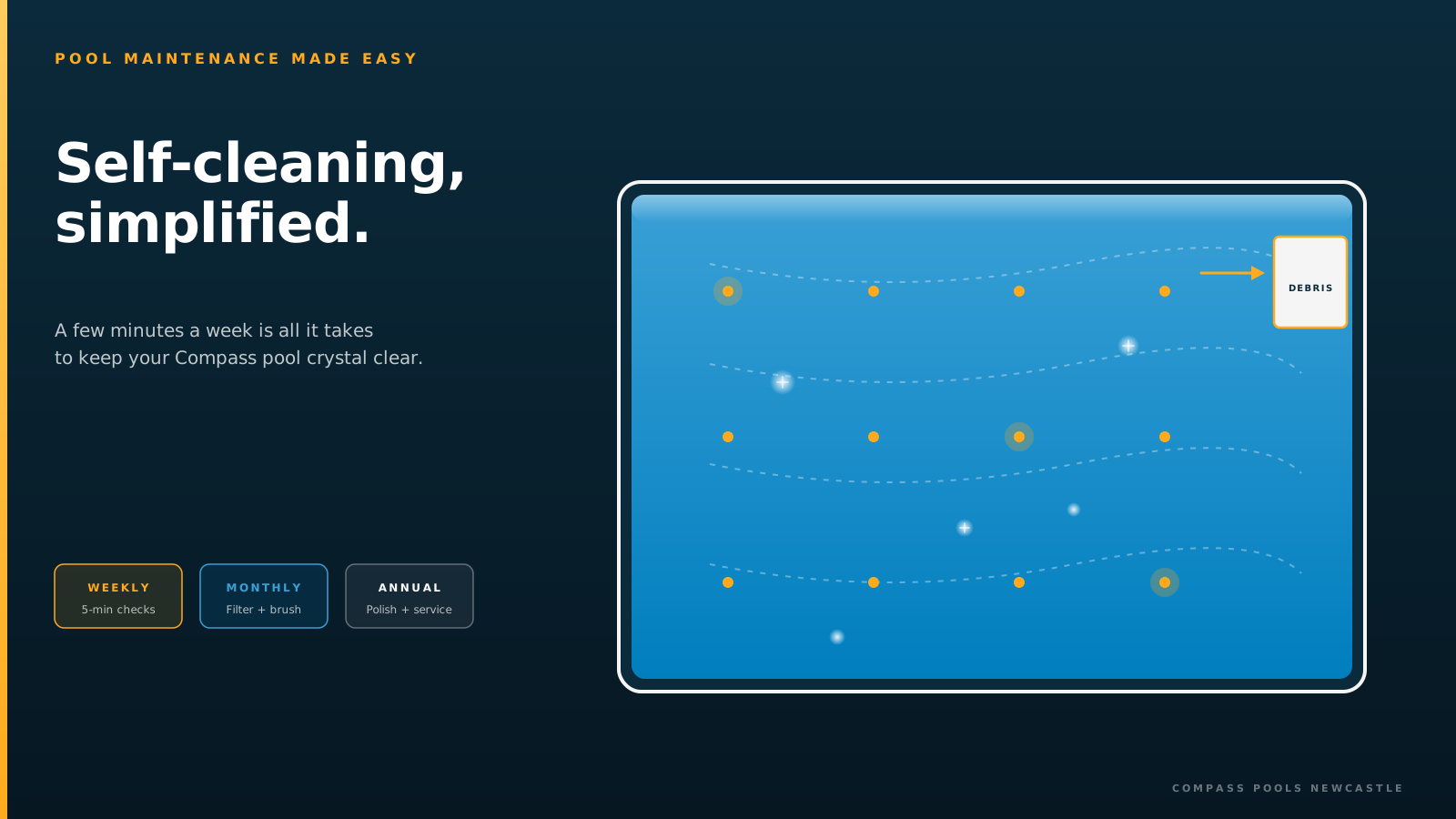
The self-cleaning system pushes debris into the dedicated leaf canister, making collection simple. Remove the basket, empty the contents, replace it, and you’re done.
Test and balance your water (summer)
During the swimming season, we recommend testing and balancing your water every 1–2 weeks.
Maintaining correct water chemistry is one of the most important parts of pool ownership. It helps to:
- Keep your water safe and hygienic
- Protect your pool equipment
- Extend the life of your pool finish
- Ensure your sanitiser works efficiently
Your Compass Pools Owner’s Guide contains all the recommended water balance levels and maintenance instructions.
Check the water level
Keep your pool water level between half and three-quarters of the way up the skimmer opening.
If the water level drops too low, your pump may draw in air. If it’s too high, the skimmer won’t remove surface debris as effectively.
Monthly pool maintenance
Once a month, it’s worth spending a little extra time giving your equipment a quick check.
Clean your filter
Depending on the type of filter installed:
- Sand filters should be backwashed.
- Cartridge filters should be removed and cleaned.
A clean filter improves water clarity and helps your equipment operate efficiently.
Test and balance your water (winter)
Even when you’re swimming less during the cooler months, your pool still requires regular water testing. We recommend testing and balancing the water monthly throughout winter to maintain healthy water and protect your pool.
Empty the pump basket
Your pump basket captures debris before it reaches the pump. Keeping it clean helps maintain strong water flow and reduces unnecessary strain on your equipment.
Check your pH dosing system
If your pool is fitted with an automatic pH dosing system, inspect the acid drum and refill it if required.
Brush walls and steps
Although the self-cleaning system does most of the work, it’s still good practice to occasionally brush the walls and entry steps using a soft-bristled pool brush. This helps remove any light surface build-up in areas that experience less water movement.
Clean the waterline
If you notice oils, sunscreen or dirt collecting around the waterline, simply wipe it away using an approved pool cleaner and a soft cloth or sponge.
Seasonal and annual maintenance
A few maintenance items only need attention every season or once a year.
Replace filter cartridges
If you have cartridge filters, they generally last around four years, although this can vary depending on usage and water quality. Replace them when they no longer clean effectively.
Replace consumable parts
Some equipment contains consumable items that naturally wear over time. For example:
- Acid dosing squeeze tubes
- Peristaltic pump tubing
- Other service items recommended during annual equipment servicing
Replacing these parts as required helps keep your automatic systems operating reliably.
Polish the fibreglass finish
To keep your Compass pool looking as beautiful as the day it was installed, many owners choose to apply a marine-grade fibreglass polish around the waterline each year. This helps maintain the pool’s glossy finish and makes future cleaning even easier.
The bottom line
One of the biggest advantages of owning a Compass Pools self-cleaning pool is that maintenance is designed to be simple. By following a straightforward routine of weekly, monthly and seasonal checks, you’ll enjoy sparkling water, efficient equipment and a pool that’s always ready to swim in.
Most importantly, you’ll spend far less time cleaning your pool — and far more time enjoying it.
If you’re ever unsure about water chemistry or equipment maintenance, your local Compass Pools team is always happy to help. After all, looking after your pool should be easy, so owning it remains a pleasure for years to come.
Frequently asked questions
How often should I test my pool water?
Every 1–2 weeks in swimming season, and monthly through winter. If you’ve had a lot of rain, a pool party, or the water looks different than usual, do an extra test — those are the situations where chemistry can shift quickly.
Do self-cleaning pools really need less maintenance?
Yes — genuinely. Vantage handles the vacuuming and circulation work that pool owners with non-self-cleaning pools spend hours on each week. You’ll still need to empty baskets, check chemistry and do the occasional brush, but the day-to-day cleaning is done for you.
What if I go on holiday for a few weeks?
Test and balance the water before you leave, empty the baskets, and make sure the timer is set to run the pump each day. If you’re away for more than 2–3 weeks, ask a friend or family member to empty the debris canister once or twice while you’re gone — especially in autumn.
Can I use household cleaners on my pool?
No — only pool-approved products. Household cleaners can throw the water chemistry out of balance, damage the fibreglass finish, or leave residues that affect your sanitiser. If you’re not sure whether a product is safe, ask us before you use it.
When should I call for professional help?
If the water goes cloudy or discoloured and won’t clear up after balancing, if equipment starts making unusual noises, or if you’re about to head into a season change and want a full check-up. We’d rather help you sort a small issue early than have it become a big one.